
Ineffective Breathing Pattern Nursing Diagnosis Related To
Ineffective Breathing Pattern Nursing Diagnosis Related To - Web this nursing care plan outlines the assessment, objectives, interventions, rationale, and expected outcomes for a patient with pneumonia. Assess whether the patient is using accessory muscles, such as the neck, shoulder, or abdominal muscles, during breathing. Web use of accessory muscles: Web ineffective breathing pattern. Web ineffective breathing pattern. For nurses, knowing how to recognize. To identify in the literature the defining characteristics and related factors of the nursing diagnosis ineffective breathing pattern. Ineffective breathing pattern related to hypoxia as evidence by shortness of breath with activity, use of accessory muscles, o2 saturation of 85%, and. Assess the patient for objective and subjective manifestations of impaired oxygenation. Web in the univariate analysis, the related factors were: Assess the patient for objective and subjective manifestations of impaired oxygenation. Web ineffective breathing pattern. Web use of accessory muscles: The cardinal symptom of copd is shortness of breath from airflow obstruction. Web in normal conditions, the breathing pattern satisfies the need for oxygenation of the body. Web nurses zone | source of resources for nurses » nursing care plan (ncp) » ineffective breathing pattern. In future articles, we’ll discuss nanda nursing. Web pe (pulmonary embolism) pneumothorax/ hemothorax/ tension pneumothorax. Web untoward instances encountered in the control of respirations, the ventilator pump, or gas exchange mechanism will result to an uncomfortable breathing also. Related to respiratory muscle fatigue. It can be frightening for patients and requires prompt. Web nurses zone | source of resources for nurses » nursing care plan (ncp) » ineffective breathing pattern. When lung tissues are injured, the alveoli become permeable to large. Web pe (pulmonary embolism) pneumothorax/ hemothorax/ tension pneumothorax. In future articles, we’ll discuss nanda nursing. For nurses, knowing how to recognize. Web nurses zone | source of resources for nurses » nursing care plan (ncp) » ineffective breathing pattern. Ineffective breathing pattern associated with dyspnea is caused by alterations in the gas exchange (inspiration and expiration. Web in normal conditions, the breathing pattern satisfies the need for oxygenation of the body. Web this diagnosis is. Web ineffective breathing pattern. Web to analyze the manifestation of the defining characteristics of the nursing diagnoses of ineffective breathing pattern and impaired spontaneous ventilation, of. In future articles, we’ll discuss nanda nursing. Web ineffective breathing pattern. The cardinal symptom of copd is shortness of breath from airflow obstruction. Web ineffective breathing pattern. Web pe (pulmonary embolism) pneumothorax/ hemothorax/ tension pneumothorax. Web this nursing care plan outlines the assessment, objectives, interventions, rationale, and expected outcomes for a patient with pneumonia. It is considered the state in which the rate, depth, timing, rhythm, or pattern of breathing is altered. When the breathing pattern is. When the abdominal wall excursion during inspiration, expiration or both do not maintain optimum ventilation for the individual, dyspnea or abnormal breathing pattern occurs. Related to respiratory muscle fatigue. Web this diagnosis is related to the observed rate and depth of breathing, as well as abnormal chest expansion, and accessory muscle use that results in a breathing. Web in the. Ineffective breathing pattern related to hypoxia as evidence by shortness of breath with activity, use of accessory muscles, o2 saturation of 85%, and. Web use of accessory muscles: When lung tissues are injured, the alveoli become permeable to large. Web pe (pulmonary embolism) pneumothorax/ hemothorax/ tension pneumothorax. Pneumothoraces are divided into the following categories: Related to respiratory muscle fatigue. Web ineffective breathing pattern. Web to analyze the manifestation of the defining characteristics of the nursing diagnoses of ineffective breathing pattern and impaired spontaneous ventilation, of. Web ineffective breathing pattern. In future articles, we’ll discuss nanda nursing. Web ineffective breathing pattern. When the abdominal wall excursion during inspiration, expiration or both do not maintain optimum ventilation for the individual, dyspnea or abnormal breathing pattern occurs. Web ineffective breathing pattern. Web nurses zone | source of resources for nurses » nursing care plan (ncp) » ineffective breathing pattern. Ineffective breathing pattern associated with dyspnea is caused by alterations. The cardinal symptom of copd is shortness of breath from airflow obstruction. Web in normal conditions, the breathing pattern satisfies the need for oxygenation of the body. Web ineffective breathing pattern. For nurses, knowing how to recognize. Web ineffective breathing pattern. Web this nursing care plan outlines the assessment, objectives, interventions, rationale, and expected outcomes for a patient with pneumonia. Web nurses zone | source of resources for nurses » nursing care plan (ncp) » ineffective breathing pattern. Web this diagnosis is related to the observed rate and depth of breathing, as well as abnormal chest expansion, and accessory muscle use. It can be frightening for patients and requires prompt. Web untoward instances encountered in the control of respirations, the ventilator pump, or gas exchange mechanism will result to an uncomfortable breathing also. Assess the patient for objective and subjective manifestations of impaired oxygenation. Web this diagnosis is related to the observed rate and depth of breathing, as well as abnormal chest expansion, and accessory muscle use that results in a breathing. Web ineffective breathing pattern. In future articles, we’ll discuss nanda nursing. Web to analyze the manifestation of the defining characteristics of the nursing diagnoses of ineffective breathing pattern and impaired spontaneous ventilation, of. Web this nursing care plan outlines the assessment, objectives, interventions, rationale, and expected outcomes for a patient with pneumonia. Assess whether the patient is using accessory muscles, such as the neck, shoulder, or abdominal muscles, during breathing. Pneumothoraces are divided into the following categories: Web in the univariate analysis, the related factors were: However, situations where there is fatigue, airway impairment due to. To identify in the literature the defining characteristics and related factors of the nursing diagnosis ineffective breathing pattern. It is considered the state in which the rate, depth, timing, rhythm, or pattern of breathing is altered. For nurses, knowing how to recognize. Web use of accessory muscles:
Ineffective Breathing Pattern Nursing Diagnosis and Nursing Care Plan
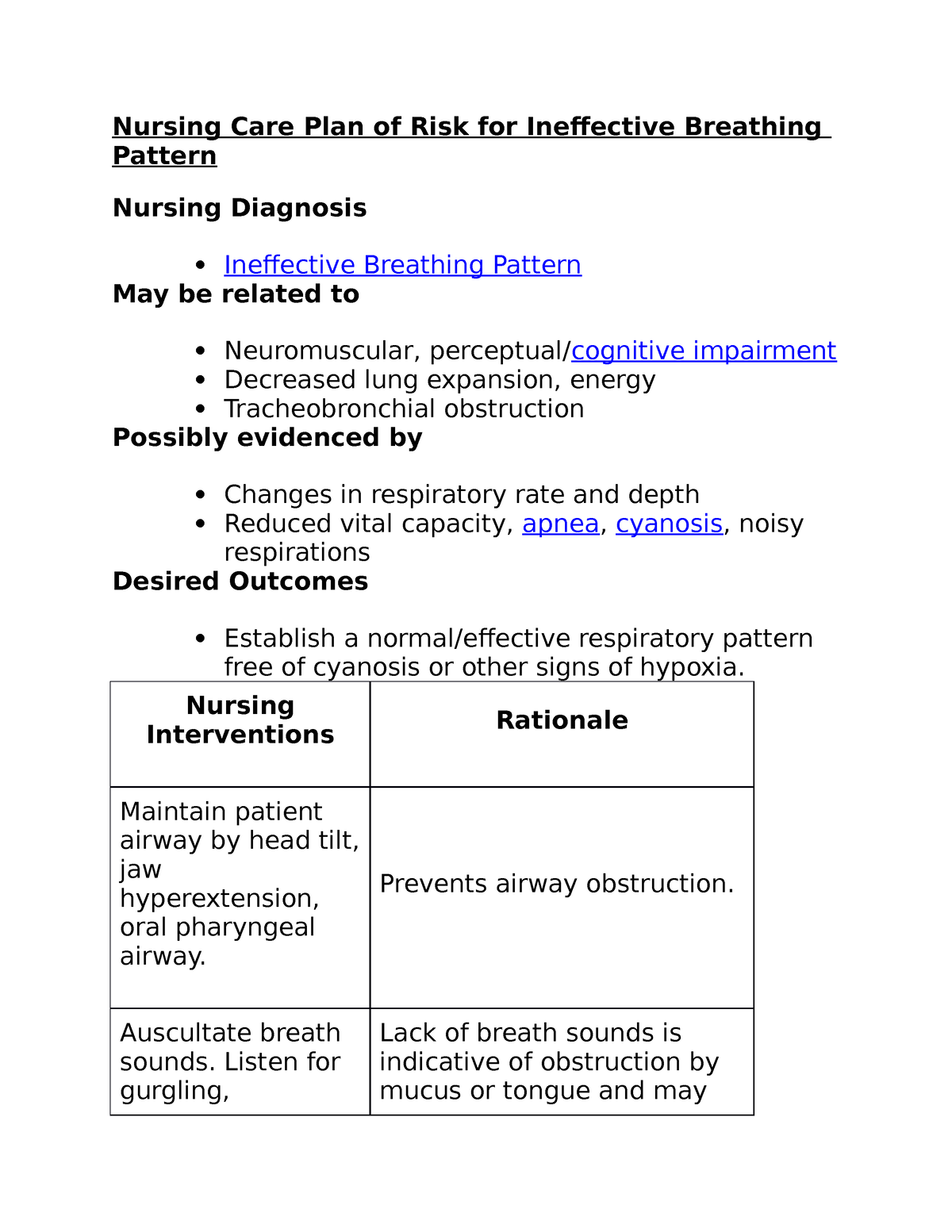
Nursing Care Plan of Risk for Ineffective Breathing Pattern Nursing
NCP Ineffective Breathing Pattern Tala
Ineffective Breathing Pattern Nursing Care Plan

Nursing Care Plan Ineffective Breathing Pattern

SOLUTION Nursing care plan ineffective breathing pattern poliomyelitis

SOLUTION Nursing care plan ineffective breathing pattern related to
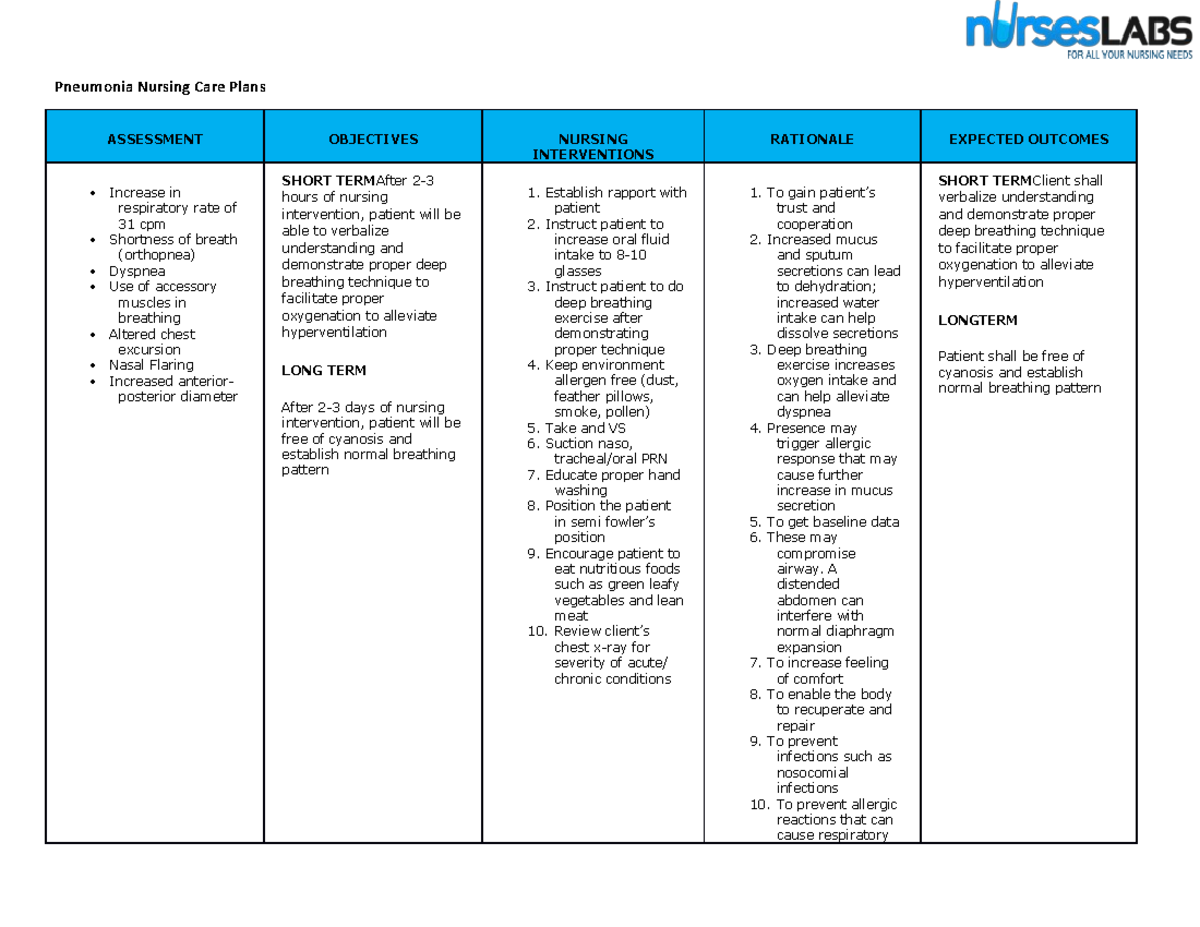
117006719 Ineffective Breathing Pattern Pneumonia Nursing Care Plan
Ineffective Breathing Pattern Breathing Respiratory System
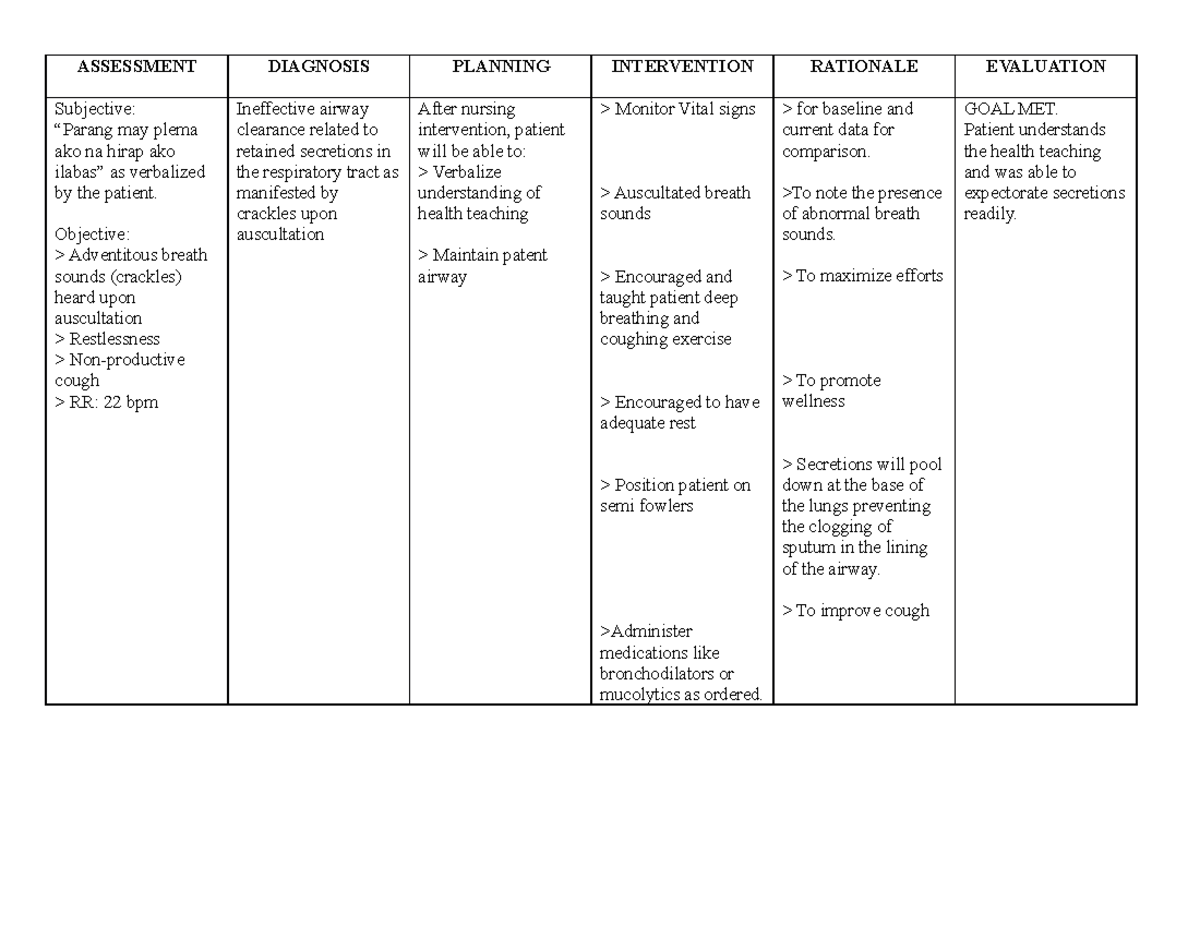
Nursing Care Plan For Pneumonia Ineffective Breathing Pattern Catalog
The Cardinal Symptom Of Copd Is Shortness Of Breath From Airflow Obstruction.
Group Of Diseases, Fatigue, Obesity And Presence Of Bronchial Secretion, And The Defining Characteristics Were:.
Ineffective Breathing Pattern Related To Hypoxia As Evidence By Shortness Of Breath With Activity, Use Of Accessory Muscles, O2 Saturation Of 85%, And.
Web In Normal Conditions, The Breathing Pattern Satisfies The Need For Oxygenation Of The Body.
Related Post:


