
Maladaptive Thinking Patterns
Maladaptive Thinking Patterns - Web maladaptive coping can escalate and even cause us to avoid engaging with others and facing up to stressful situations. Mental health professionals first described them in the late 1970s and early 1980s. It also provides ways to overcome maladaptive behaviors and use productive coping mechanisms instead. Consider, for example, that what we call “ anxiety disorders” are usually marked. Avoidance, withdrawal, and passive aggression are examples of. Web a distorted thought or cognitive distortion — and there are many — is an exaggerated pattern of thought that’s not based on facts. Web cognitive distortions are thoughts that cause you to perceive reality inaccurately. Web maladaptive thoughts are firmly established patterns of thinking that are often intrusive, negatively biased, rigid, distorted and inaccurate. Web cognitive distortions are types of thinking patterns that emphasize negative biases. Having cognitive challenges, like attention deficit. Having difficulty adjusting to school, work, or social situations. Read on to learn about cognitive restructuring and how it can help you improve your thinking. Our brains are continually processing lots of information. Web cognitive distortions are types of thinking patterns that emphasize negative biases. By minimizing or avoiding these irrational thought patterns, clients can maintain a more balanced perspective, lower anxiety, and feel better about themselves. Beliefs that are negatively biased, inaccurate, and rigid are thought to play a key role in the mood and anxiety disorders. Web cognitive distortions are thoughts that cause you to perceive reality inaccurately. In doing so, they perpetuate or worsen anxiety or depression. Having poor social skills, like lacking empathy or compassion. Several techniques can help us reframe our thinking, get back on track, and engage with the activities we avoid. Web cognitive behavioral therapy combines cognitive therapy with behavior therapy by identifying maladaptive patterns of thinking, emotional responses, or behaviors and replacing them with more desirable patterns. Web cognitive distortions are types of thinking patterns that emphasize negative biases. Web use this cbt worksheet to educate clients on how to recognize cognitive distortions and their impact on mood. Several techniques. By minimizing or avoiding these irrational thought patterns, clients can maintain a more balanced perspective, lower anxiety, and feel better about themselves. Having difficulty adjusting to school, work, or social situations. Irrational thinking can feel isolating. Web cognitive distortions are types of thinking patterns that emphasize negative biases. Web cognitive behavioral therapy combines cognitive therapy with behavior therapy by identifying. It also provides ways to overcome maladaptive behaviors and use productive coping mechanisms instead. Web use this cbt worksheet to educate clients on how to recognize cognitive distortions and their impact on mood. They are symptoms characterized by irrational or exaggerated thinking patterns that reinforce negative beliefs and emotions. Irrational thinking can feel isolating. Having poor social skills, like lacking. They are symptoms characterized by irrational or exaggerated thinking patterns that reinforce negative beliefs and emotions. Web cognitive restructuring refers to behavioral therapy techniques that help you identify and challenge unhelpful, inaccurate thought patterns and replace them with healthier ways of thinking. Web maladaptive behavior is behavior that prevents you from making adjustments that are in your own best interest.. Something is either good or bad, right or wrong, all or nothing. You might wonder, does everyone think this way, and what can i do. Web cognitive restructuring refers to behavioral therapy techniques that help you identify and challenge unhelpful, inaccurate thought patterns and replace them with healthier ways of thinking. It consequently leads you to view things more. Even. Web schema therapy is a type of therapy that targets schemas, a term used clinically to describe maladaptive patterns of thinking that could cause someone to engage in unhealthy behavior, or to. Having difficulty adjusting to school, work, or social situations. A person with this dichotomous thinking pattern typically sees things in terms of either/or. Web cognitive behavioral therapy combines. Even if you are not struggling with depression, anxiety, or another serious mental health issue, it doesn’t hurt to evaluate your own thoughts every now and then. By minimizing or avoiding these irrational thought patterns, clients can maintain a more balanced perspective, lower anxiety, and feel better about themselves. Web this article covers the definition of maladaptive behaviors, types of. Web cognitive distortions are types of thinking patterns that emphasize negative biases. Web cognitive restructuring refers to behavioral therapy techniques that help you identify and challenge unhelpful, inaccurate thought patterns and replace them with healthier ways of thinking. Having poor social skills, like lacking empathy or compassion. Several techniques can help us reframe our thinking, get back on track, and. Web maladaptive coping can escalate and even cause us to avoid engaging with others and facing up to stressful situations. Avoidance, withdrawal, and passive aggression are examples of. Web maladaptive thoughts are firmly established patterns of thinking that are often intrusive, negatively biased, rigid, distorted and inaccurate. Even if you are not struggling with depression, anxiety, or another serious mental. Avoidance, withdrawal, and passive aggression are examples of. Web cognitive restructuring refers to behavioral therapy techniques that help you identify and challenge unhelpful, inaccurate thought patterns and replace them with healthier ways of thinking. Having difficulty adjusting to school, work, or social situations. You might wonder, does everyone think this way, and what can i do. It consequently leads you. In doing so, they perpetuate or worsen anxiety or depression. Web maladaptive behavior is behavior that prevents you from making adjustments that are in your own best interest. Read on to learn about cognitive restructuring and how it can help you improve your thinking. Having cognitive challenges, like attention deficit. Our brains are continually processing lots of information. It also provides ways to overcome maladaptive behaviors and use productive coping mechanisms instead. Having poor social skills, like lacking empathy or compassion. Several techniques can help us reframe our thinking, get back on track, and engage with the activities we avoid. Something is either good or bad, right or wrong, all or nothing. Web cognitive distortions are thoughts that cause you to perceive reality inaccurately. Having difficulty adjusting to school, work, or social situations. Web these sneaky, inaccurate patterns of thinking and believing are common, but their potential impact should not be underestimated. Web cognitive distortions are internal mental filters or biases that increase our misery, fuel our anxiety, and make us feel bad about ourselves. Even if you are not struggling with depression, anxiety, or another serious mental health issue, it doesn’t hurt to evaluate your own thoughts every now and then. Mental health professionals first described them in the late 1970s and early 1980s. They are symptoms characterized by irrational or exaggerated thinking patterns that reinforce negative beliefs and emotions.
Maladaptive Thinking Patterns Free Patterns
![The Ultimate Guide to Early Maladaptive Schemas [Full List]](https://149405263.v2.pressablecdn.com/wp-content/uploads/2021/03/the-18-maladaptive-schemas-1024x836.jpg)
The Ultimate Guide to Early Maladaptive Schemas [Full List]

Maladaptive Thinking Patterns Free Patterns

DBT SelfHelp Resources maladaptive coping styles behavioural

Maladaptive Thinking Patterns Free Patterns

Maladaptive Overcontrol Visual Resources
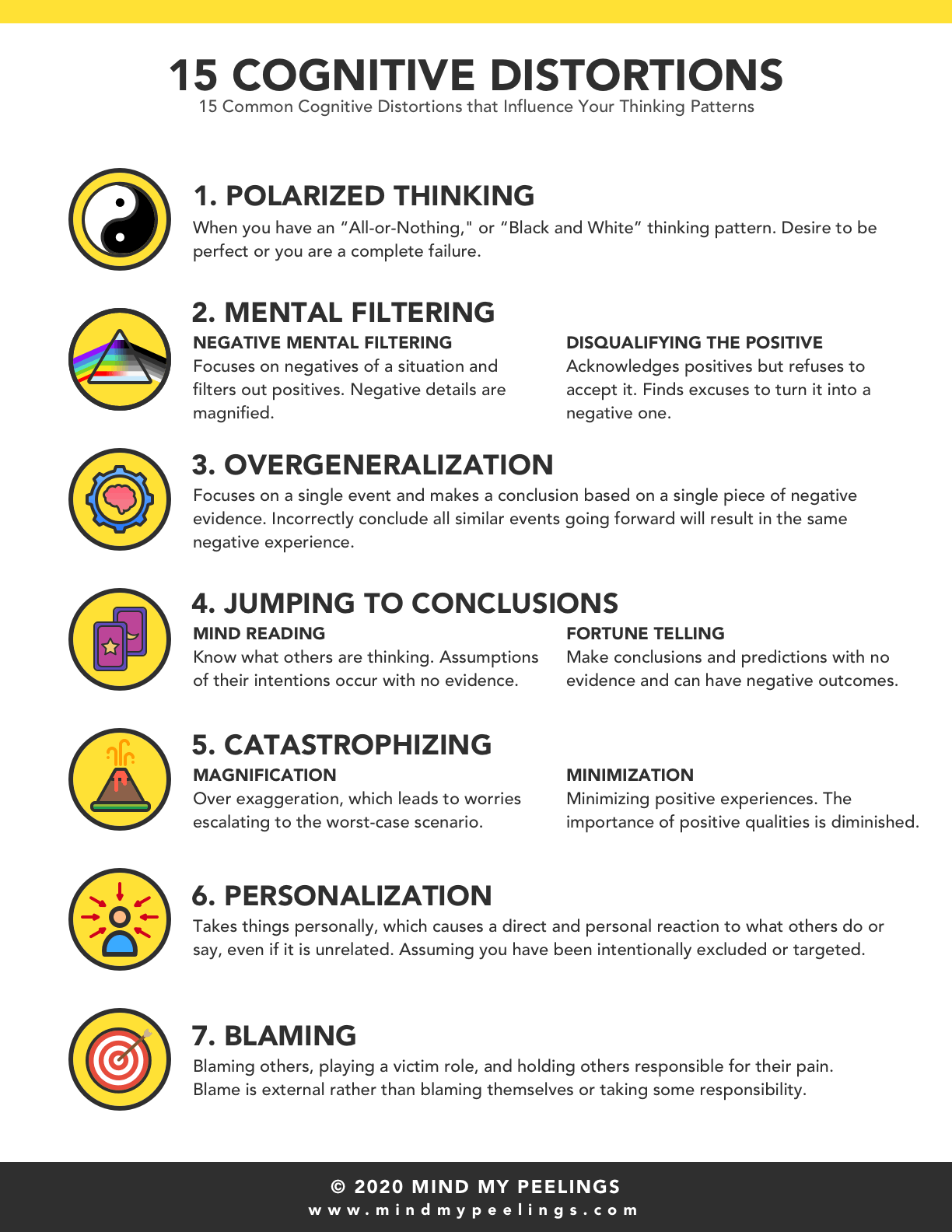
15 Common Cognitive Distortions — Mind My Peelings

Maladaptive Thinking Patterns Free Patterns

Maladaptive Thinking Patterns Free Patterns

Maladaptive Thinking Patterns Free Patterns
Web What Are Maladaptive Thoughts, And Beliefs And Why They Are Important In Brief Cbt?
Beliefs That Are Negatively Biased, Inaccurate, And Rigid Are Thought To Play A Key Role In The Mood And Anxiety Disorders.
Web Cognitive Distortions Are Types Of Thinking Patterns That Emphasize Negative Biases.
Consider, For Example, That What We Call “ Anxiety Disorders” Are Usually Marked.
Related Post: