
Pencil Grasp Patterns
Pencil Grasp Patterns - A functional pencil grasp should facilitate dynamic movement of the fingers in varying directions (up/down, side to side, diagonally, and in circular. It involves holding the pencil between the thumb and index finger, with the pencil resting on the middle finger. Pencil skills indicates a child's ability to color within the lines, trace a shape and draw a picture forms the building blocks for writing letters and words. Web your pencil grasp is directly related to handwriting speed and legibility. First 2 fingers hold object against the thumb. Fingers press object against palm, no use of thumb. Sometimes you will hear this called the fist grasp. Web we documented six categories of pencil grasp: Web grasping patterns emerge in this general pattern: Four mature grasp patterns, one immature grasp pattern, and one alternating grasp pattern. The 4th and 5th fingers (ring finger and pinkie finger) are tucked inside the palm of the hand. The palmer supinate pencil grasp. The tripod grasp is considered the most efficient and commonly taught pencil grasp. Understanding pencil grasp developmental milestones: Web your pencil grasp is directly related to handwriting speed and legibility. Web the second most common grip pattern involves the thumb and first two fingers, like the dynamic tripod. Holds a crayon/pencil with the palm of the hand facing down towards. Fingers press object against palm, no use of thumb. Variances in patterns of grasp promote refined coordination in motor skills, or finger dexterity. A functional pencil grasp should facilitate dynamic movement of the fingers in varying directions (up/down, side to side, diagonally, and in circular. Web grasping patterns emerge in this general pattern: Pencil skills indicates a child's ability to color within the lines, trace a shape and draw a picture forms the building blocks for writing letters and words. The tripod grasp is considered the most efficient and commonly taught pencil grasp. — common questions occupational therapists may hear from parents about their child.. Pencil skills indicates a child's ability to color within the lines, trace a shape and draw a picture forms the building blocks for writing letters and words. For this grasp, a child holds the pencil between the thumb and index finger with the pencil resting on the middle finger. How should they hold a pencil? Understanding pencil grasp developmental milestones:. The primitive pencil grasp is the initial way children grab a pencil. The tripod grasp is considered the most efficient and commonly taught pencil grasp. Fingers press object against palm, no use of thumb. Various grasp patterns are needed to: Yes, your baby is developing the skills it needs for future handwriting! The wrist is in neutral or in a supinated position. Web understanding the stages of pencil grasp development. Web grasping patterns emerge in this general pattern: Encouraging a mature pencil grasp includes skills such as core strength, crossing midline, bilateral coordination, shoulder and arm stability, separation of the two sides of the hand, improving hand strength, along with finger dexterity. Proper developmental toys and activities can offer many opportunities for hand strengthening. Variances in patterns of grasp promote refined coordination in motor skills, or finger dexterity. Yes, your baby is developing the skills it needs for future handwriting! Multiple linear regression results revealed no significant effect for mature grasp on either legibility or speed. A functional pencil grasp should facilitate. Yes, your baby is developing the skills it needs for future handwriting! Variances in patterns of grasp promote refined coordination in motor skills, or finger dexterity. The movement when writing is primarily on the fifth finger side of the hand. Various grasp patterns are needed to: For this grasp, a child holds the pencil between the thumb and index finger. The primitive pencil grasp is the initial way children grab a pencil. Web understanding the stages of pencil grasp development. Fingers press object against palm, no use of thumb. Encouraging a mature pencil grasp includes skills such as core strength, crossing midline, bilateral coordination, shoulder and arm stability, separation of the two sides of the hand, improving hand strength, along. The pencil is held with the tips of all five fingers. The movement when writing is primarily on the fifth finger side of the hand. The primitive pencil grasp is the initial way children grab a pencil. Web learn the stages of pencil grasp development, when they start developing, and why your kiddo's might look different. With this guide, you. What parents and teachers can do to address those factors. Multiple linear regression results revealed no significant effect for mature grasp on either legibility or speed. Web we have included the stages and ages of pencil grasp development, as well as, how to develop hand strength and fine motor skills to encourage proper grip. Think of pencil grips as a. Due to this whole arm movement they prefer to work on a vertical surface. Do i hold it correctly? Pencil skills indicates a child's ability to color within the lines, trace a shape and draw a picture forms the building blocks for writing letters and words. It involves holding the pencil between the thumb and index finger, with the pencil. Various grasp patterns are needed to: A functional pencil grasp should facilitate dynamic movement of the fingers in varying directions (up/down, side to side, diagonally, and in circular. — common questions occupational therapists may hear from parents about their child. Multiple linear regression results revealed no significant effect for mature grasp on either legibility or speed. Web your pencil grasp is directly related to handwriting speed and legibility. Holds the crayon/pencil in fist (whole hand) like a dagger. It involves holding the pencil between the thumb and index finger, with the pencil resting on the middle finger. I have a blog post all about what typical pencil grasp development looks like, starting at just a few months old. Holds a crayon/pencil with the palm of the hand facing down towards. Four mature grasp patterns, one immature grasp pattern, and one alternating grasp pattern. Fingers press object against palm, no use of thumb. Do i hold it correctly? The pencil is held with the tips of all five fingers. Radial palmar grasp (around 6 months): A pencil too tightly, what should i do? Web understanding the stages of pencil grasp development.
Figure 1 from Pencil grasp and children's handwriting legibility during

Types Of Pencil Grasp Patterns

Pencil Grasp Handwriting activities, Pencil grasp, Preschool fine motor

Pencil Grasp Development Handout Pencil grasp, Pencil grasp
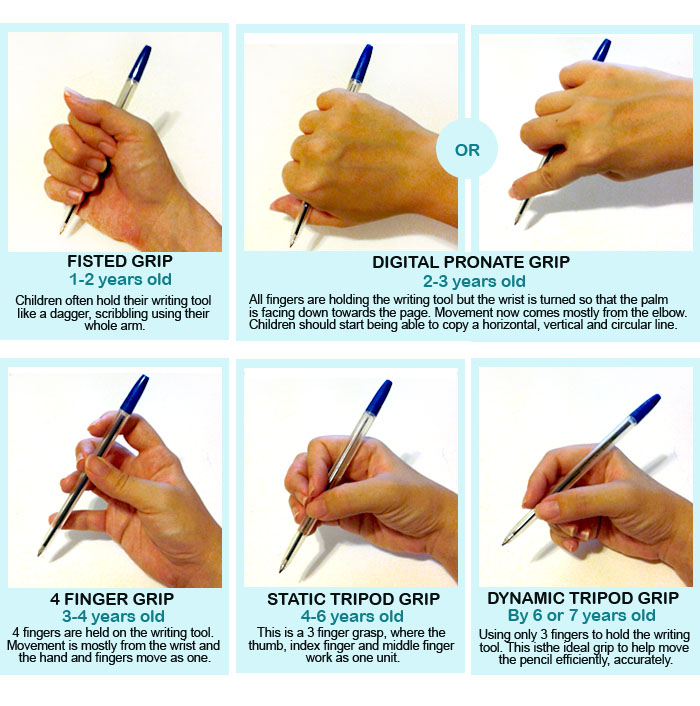
Pencil Grasp Development in Children

Pencil Grasp Basics An Infographic Occupational therapy handwriting

Functional and efficient Pencil Grasp. Dynamic Tripod, dynamic

Pencil Grasp Development in Kindergartners Pencil grasp, Pencil grasp
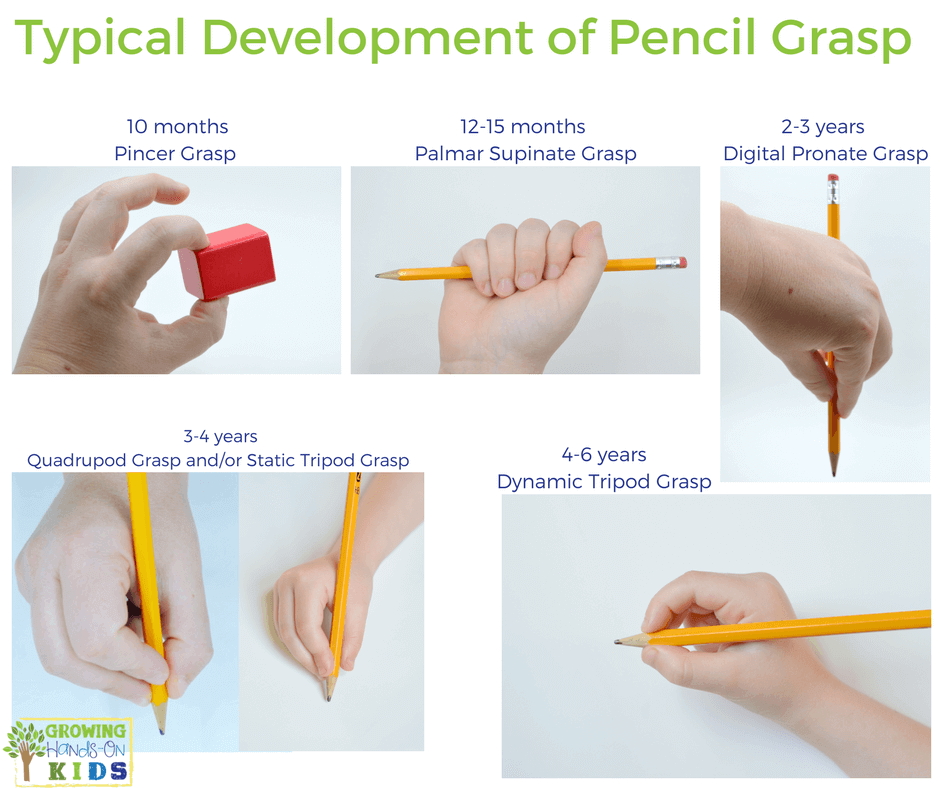
Typical Pencil Grasp Development for Kids

Development of Pencil Grasp How to Promote a Functional Grasp with 5
Pencil Skills Indicates A Child's Ability To Color Within The Lines, Trace A Shape And Draw A Picture Forms The Building Blocks For Writing Letters And Words.
The Difference Is That The Thumb Crosses The Barrel Of The Pencil, Clamping It To.
Web Pencil Grasp Patterns Describe How A Child Holds A Pencil.
A Mature Grasp Is More Efficient And Less Fatiguing.
Related Post: