
Traffic Pattern Entry
Traffic Pattern Entry - Usually employed for practicing instrument approaches. Web airport traffic patterns ensure that air traffic moves into and out of an airport safely. Our maps show updates on road construction, traffic accidents, travel delays and the latest traffic speeds. Web there are six recognized methods for entering a traffic pattern: Web it is important to fly standard traffic pattern procedures to ensure the safe and orderly flow of aircraft to and from an airport. The exact nature of each airport traffic pattern is dependent on the runway in use, wind. Web traffic patterns provide procedures for takeoffs, departures, arrivals, and landings. Follow five easy steps to position yourself safely and accurately. Enter pattern in level flight, abeam midpoint of the runway, at pattern altitude (1,000' agl is recommended pattern altitude unless established otherwise.) try not to enter the pattern on base/final even if that is the quickest as it does not afford you a look at the runway until you're on final maintain pattern altitude. The exact nature of each airport traffic pattern is dependent on the runway in use, wind. The exact nature of each airport traffic pattern is dependent on the runway in use, wind. The direction and placement of the pattern, the altitude at which it is to be flown, and the. Web airport traffic patterns ensure that air traffic moves into and out of an airport safely. Traffic patterns are established to: Our maps show updates on road construction, traffic accidents, travel delays and the latest traffic speeds. Web a traffic pattern is the traffic flow prescribed for aircraft landing at, taxiing on, or taking off from, an airport. Follow five easy steps to position yourself safely and accurately. Web answer 1 of 2: Web it is important to fly standard traffic pattern procedures to ensure the safe and orderly flow of aircraft to and from an airport. Web requirements for traffic pattern flow under § 91.126 continue to apply to other airspace classification types under § 91.127 (class e airspace), § 91.129 (class d airspace), and. The direction and placement of the pattern, the altitude at which it is to be flown, and the. Web the faa has released updated guidance on how we pilots are expected to fly traffic patterns, and the updates are fairly extensive and for the most part really. Web the traffic patterns provide specific routes for takeoffs, departures, arrivals, and landings.. Web friday, july 19. Data is automatically updated every 5. The exact nature of each airport traffic pattern is dependent on the runway in use, wind. Web let’s take a look at why this is considered the best practice. Our maps show updates on road construction, traffic accidents, travel delays and the latest traffic speeds. Data is automatically updated every 5. Web there are six recognized methods for entering a traffic pattern: Web the traffic patterns provide specific routes for takeoffs, departures, arrivals, and landings. Follow five easy steps to position yourself safely and accurately. Web answer 1 of 2: We are driving from s. Web it is important to fly standard traffic pattern procedures to ensure the safe and orderly flow of aircraft to and from an airport. Find out the traffic pattern altitude, speed, radio calls, and wind. Florida on a friday afternoon and want to avoid bad traffic in orlando. Web there are six recognized methods for. Enter pattern in level flight, abeam midpoint of the runway, at pattern altitude (1,000' agl is recommended pattern altitude unless established otherwise.) try not to enter the pattern on base/final even if that is the quickest as it does not afford you a look at the runway until you're on final maintain pattern altitude. Web let’s take a look at. Web here we'll illustrate several methods to accomplish this, depending on the direction from which you're approaching the airport, in an effort to get established on the downwind leg at the published. Find out the traffic pattern altitude, speed, radio calls, and wind. The exact nature of each airport traffic pattern is dependent on the runway in use, wind. Web. We are driving from s. Our maps show updates on road construction, traffic accidents, travel delays and the latest traffic speeds. Web a traffic pattern is the traffic flow prescribed for aircraft landing at, taxiing on, or taking off from, an airport. The exact nature of each airport traffic pattern is dependent on the runway in use, wind. The exact. Web there are six recognized methods for entering a traffic pattern: Our maps show updates on road construction, traffic accidents, travel delays and the latest traffic speeds. Web friday, july 19. Web airport traffic patterns ensure that air traffic moves into and out of an airport safely. Usually employed for practicing instrument approaches. Web a traffic pattern is the traffic flow prescribed for aircraft landing at, taxiing on, or taking off from, an airport. Web let’s take a look at why this is considered the best practice. Web the faa has released updated guidance on how we pilots are expected to fly traffic patterns, and the updates are fairly extensive and for the. Usually employed for practicing instrument approaches. The direction and placement of the pattern, the altitude at which it is to be flown, and the. What time (if at all ) does it get bad, and where does it build up? Web requirements for traffic pattern flow under § 91.126 continue to apply to other airspace classification types under § 91.127. Web it is important to fly standard traffic pattern procedures to ensure the safe and orderly flow of aircraft to and from an airport. Traffic patterns are established to: Follow five easy steps to position yourself safely and accurately. Usually employed for practicing instrument approaches. Our maps show updates on road construction, traffic accidents, travel delays and the latest traffic speeds. Web traffic patterns provide procedures for takeoffs, departures, arrivals, and landings. The exact nature of each airport traffic pattern is dependent on the runway in use, wind. Web airport traffic patterns ensure that air traffic moves into and out of an airport safely. Florida on a friday afternoon and want to avoid bad traffic in orlando. Web there are six recognized methods for entering a traffic pattern: Web the faa has released updated guidance on how we pilots are expected to fly traffic patterns, and the updates are fairly extensive and for the most part really. Data is automatically updated every 5. Web the traffic patterns provide specific routes for takeoffs, departures, arrivals, and landings. The direction and placement of the pattern, the altitude at which it is to be flown, and the. Enter pattern in level flight, abeam midpoint of the runway, at pattern altitude (1,000' agl is recommended pattern altitude unless established otherwise.) try not to enter the pattern on base/final even if that is the quickest as it does not afford you a look at the runway until you're on final maintain pattern altitude. Web answer 1 of 2:
How Do You Enter And Exit The Traffic Pattern At An Uncontrolled Airport?
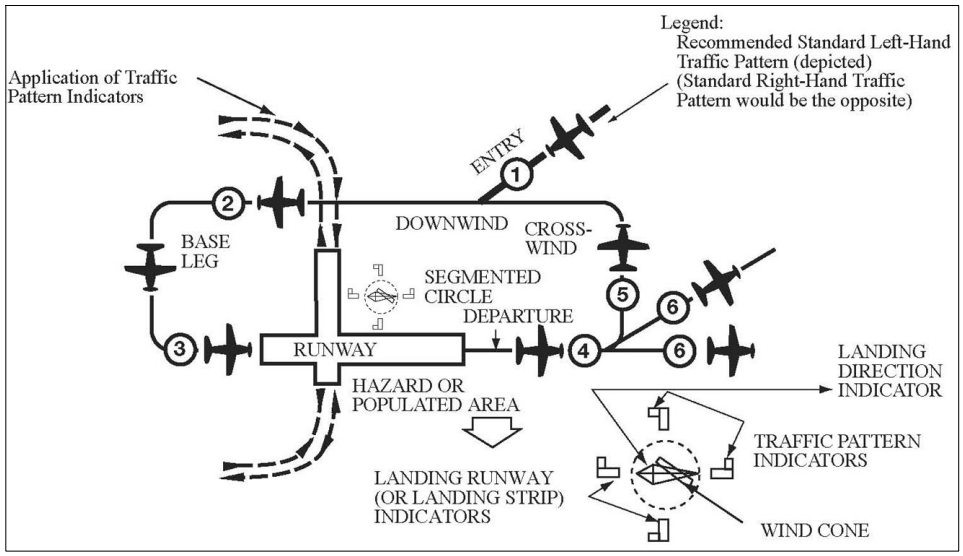
Traffic Pattern Operations
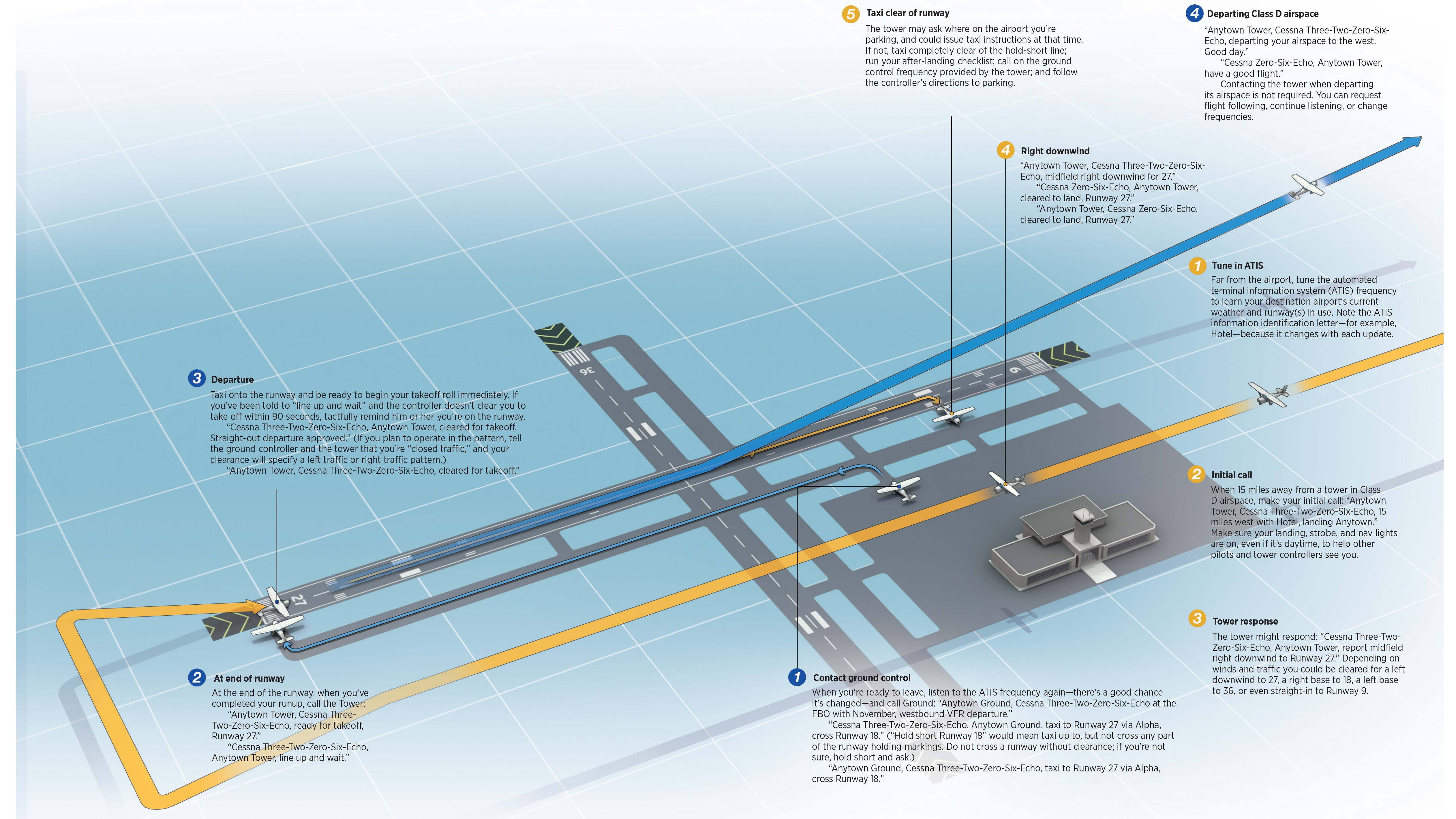
Technique Towered airport traffic pattern operations AOPA
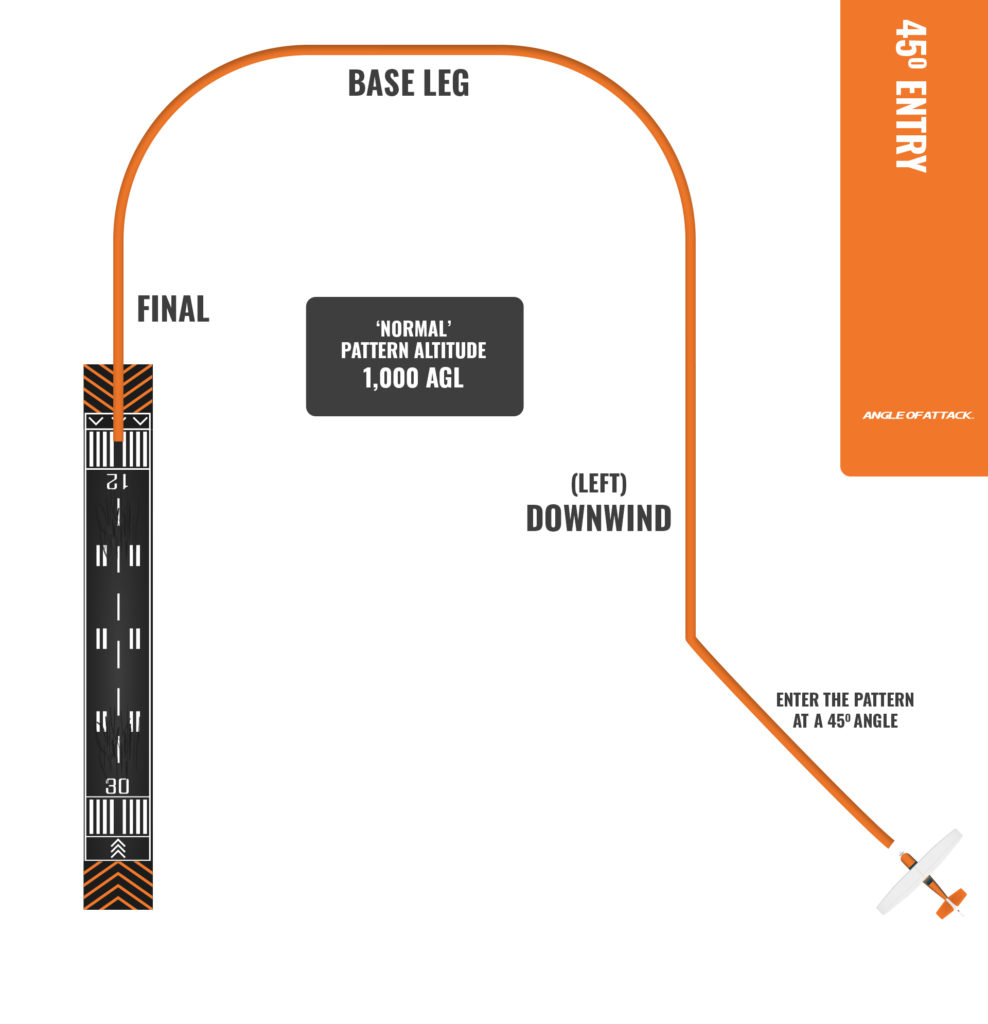
Ultimate Guide to Flying the Perfect Traffic Pattern Angle of Attack
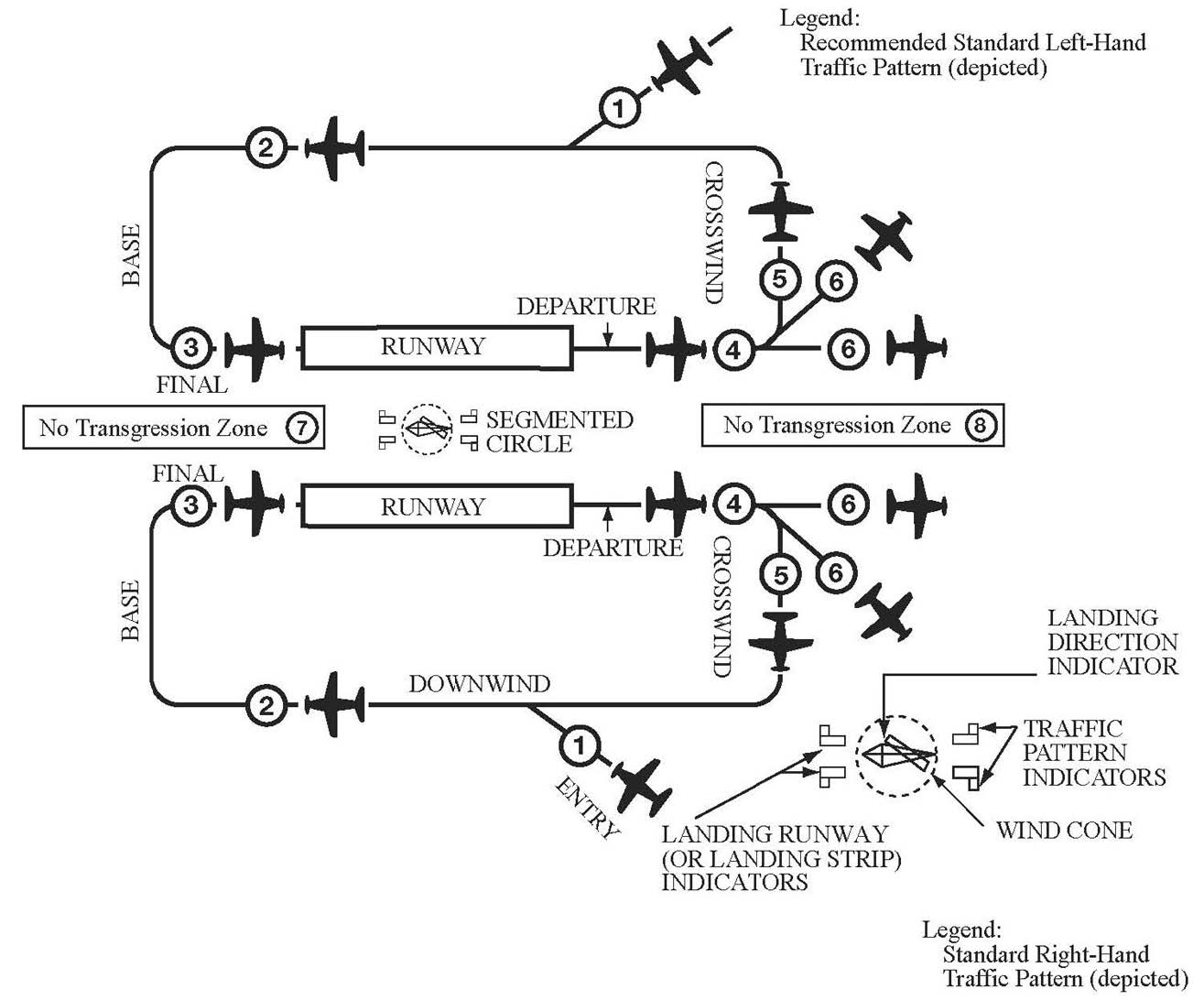
Airport Operations

What’s the proper way to enter the traffic pattern at KSCK (towered

Video Tip How to enter the traffic pattern at a nontowered airport

Video Tip How to enter the traffic pattern at a nontowered airport
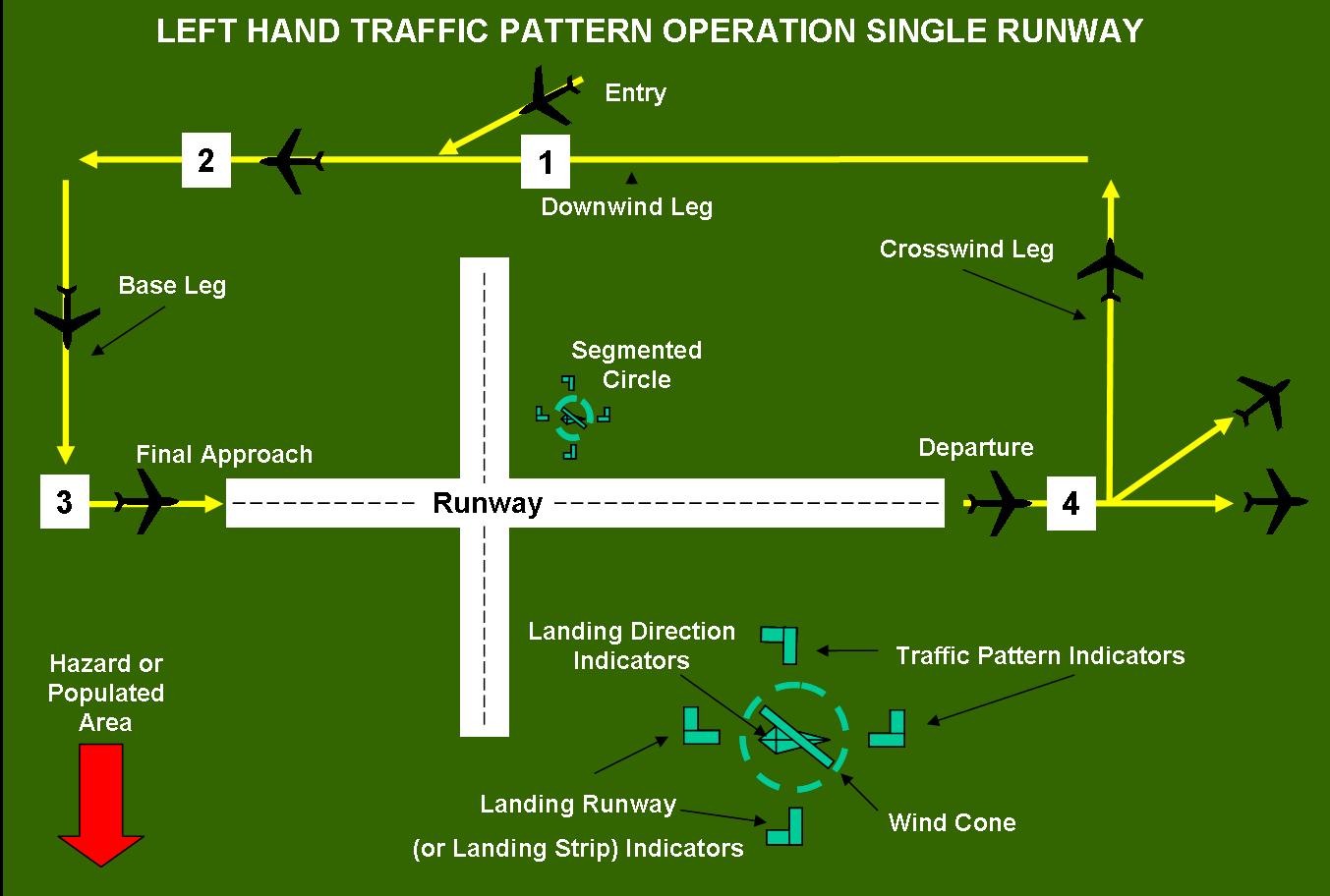
Airport Traffic Patterns Design Plane
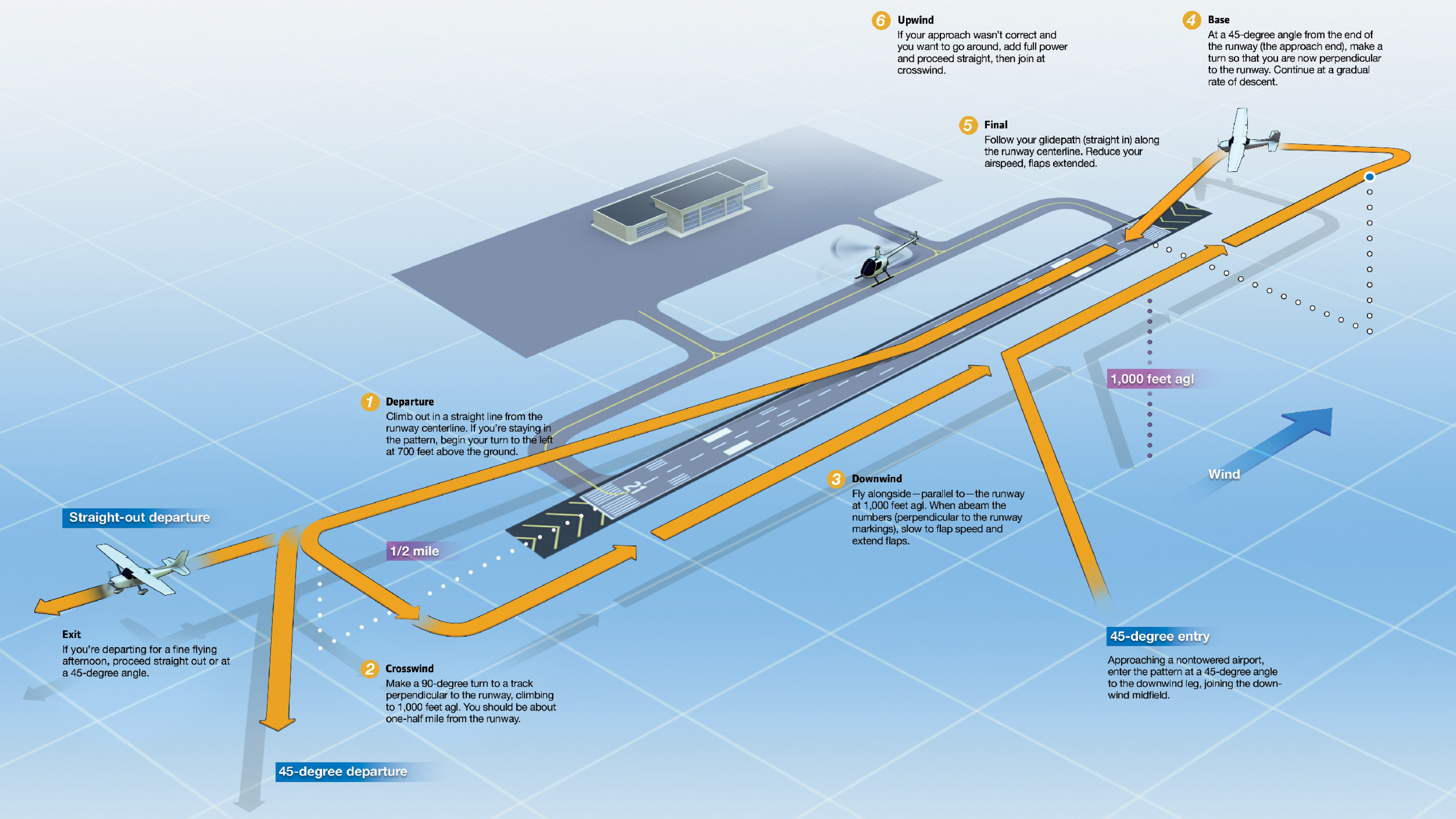
Technique The traffic pattern AOPA
Find Out The Traffic Pattern Altitude, Speed, Radio Calls, And Wind.
We Are Driving From S.
Web Friday, July 19.
The Exact Nature Of Each Airport Traffic Pattern Is Dependent On The Runway In Use, Wind.
Related Post: